

Fire door checks cover the door, frame, glazing, hinges, ironmongery, seals, spacing and self-closing mechanism. Above 11m, communal doors need checks every three months, flat entrance doors annually.
Fire doors help contain fire and smoke, protecting escape routes during an emergency. They only provide that protection when they remain in good working order. This fire door maintenance checklist covers the visual checks to make, how often inspections are required, and when faults call for repair or replacement. It also explains who holds legal responsibility under the rules in England.
Key Takeaways
- Routine legal checks are simple and visual, so specialist tools are unnecessary.
- FDIS data found 72% of inspected doors failed in 2025, although 70% needed only minor remedial work.
- Faults should be repaired or replaced by a competent contractor as soon as reasonably practicable.
What a Fire Door Actually Does
A fire door helps slow the spread of fire and smoke through a building. It is designed to resist fire for a set period, giving people more time to reach a safe exit and helping keep escape routes usable.
For flat entrance and escape route doors, Building Regulations guidance generally expects at least 30 minutes of fire resistance. The House of Commons Library’s fire safety rules for blocks of flats also note that these doors should have smoke seals and self-closing devices.
These features work together to keep the door closed, limit smoke movement and maintain protection around the escape route while occupants leave the building.
How Common Are Fire Door Failures?
Fire door problems are fairly common, even in buildings where doors are already subject to regular checks. FDIS inspection data from 2025 found that 72% of fire doors inspected by approved inspectors failed to meet the required standard.
That figure sounds high, but a failed inspection does not automatically mean the door needs replacing. In fact, 70% of the non compliant doors needed only minor remedial work. The UK fire door inspection data identified excessive gaps, smoke sealing problems and poor care and maintenance among the common issues found.
This shows why routine checks matter. Small faults can often be dealt with through straightforward remedial work before they become a larger fire safety concern.
How Often Should Fire Doors Be Checked?
Fire door check frequency depends on the building height, door type and legal duties that apply. For blocks of flats in England, the requirements vary between communal doors, flat entrance doors and other fire doors.
The 11m threshold is important because it determines when the specific Regulation 10 checking regime applies. The fire door guidance under the Fire Safety (England) Regulations 2022 explains which doors fall within these duties and what the responsible person must record.
For buildings below that threshold, there is no equivalent fixed timetable under Regulation 10. Fire doors still need attention as part of the wider duty to keep fire safety measures in efficient working order and good repair.
The legal timetable should also be treated as a minimum. Doors in busy communal areas can face greater wear, so regular monitoring between formal checks can help spot damage, loose components or other faults early.
Our fire door inspections service can help when a more detailed inspection is needed.
What Should You Look for During a Fire Door Check (A Complete Checklist)
A fire door check should start with a visual inspection of the complete door assembly. The aim is to spot visible damage, missing components, poor repairs or changes that could affect how the door performs during a fire.
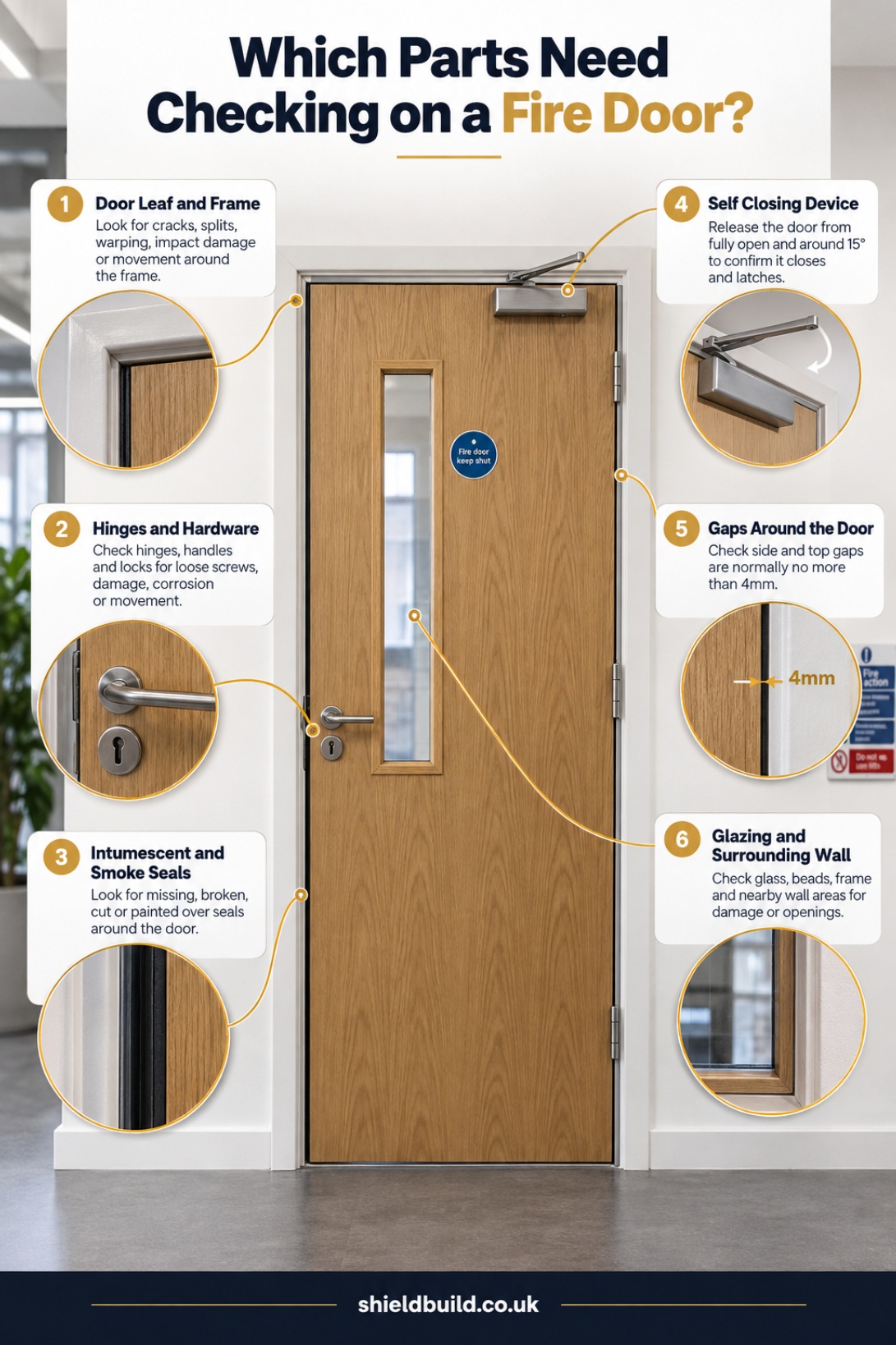
These checks are straightforward, but they need to cover the whole door rather than focusing on one obvious defect.
Door Type and Alterations
Confirm the door remains the correct fire resisting type for its location. Check for a fire door rating label or identification marking where provided. Ensure it has not been replaced with an ordinary internal door.
Check for new holes, cut outs, fittings or alterations that could affect fire performance.
Letterboxes
Where a fire door has a letterbox, check that the flap closes properly and is not stuck open. Look for loose fittings, excessive wear or damage around the opening. Any replacement letterbox should be suitable for a fire resisting door.
A standard domestic letterbox is not automatically suitable just because it fits.
Door, Frame and Surrounding Wall
Inspect the door leaf for cracks, splits, impact damage, distortion or removed material. Check the frame for damage, loose sections or movement.
Inspect the surrounding wall for cracks, damage or openings around the frame that could affect support or allow fire and smoke to pass around the door.