
Can an Existing Door Be Upgraded to FD30S? | Shield Build UK

Can an Existing Door Be Upgraded to FD30S

An existing fire door can sometimes be upgraded to FD30S. However, only where its construction, condition, frame, components and available evidence support the required fire and smoke performance.

An existing door can sometimes be upgraded to FD30S rather than replaced completely. That decision depends on the condition of the door, how it was constructed and whether its fire performance can be supported with suitable evidence. Adding seals or changing hardware alone does not automatically create an FD30S door. A competent assessment should establish whether upgrading is appropriate.

Key Takeaways

  1. A sound existing fire door may be suitable for an FD30S upgrade.
  2. The door leaf, frame, seals, hinges, closer, glazing and hardware must be considered together.
  3. Damage, unsuitable construction or insufficient evidence can make replacement the better option.
  4. An existing door does not automatically need to meet the same standards as a newly installed fire door.

What Is an FD30S Fire Door?

An FD30S fire door is a complete fire door assembly designed to provide 30 minutes of fire resistance while also limiting the spread of smoke. FD30 refers to the 30 minute fire resistance period, while S refers to smoke control.
The important bit is that the rating applies to the whole doorset, not just the door leaf. The frame, hinges, closer, intumescent seals, glazing, locks and other components all need to be suitable for the required performance.
According to FireSafe’s guidance on upgrading doors to fire doors, these components need to be considered together when assessing the fire performance of an existing door.
So, adding a new seal or closer alone does not automatically make an existing door FD30S. The complete assembly needs suitable supporting evidence, such as testing, assessment or certification.

Can an Existing Door Be Upgraded to FD30S?

Yes, some existing doors can be upgraded to FD30S. The underlying door needs to be suitable, structurally sound and capable of accepting compatible components without compromising the assembly.

The door and frame also need to work together. This includes:

  • The gaps
  • Seals
  • Hinges
  • Closer
  • Glazing
  • Locking hardware.

For existing flat entrance doors, government guidance is particularly important. It states that the Fire Safety (England) Regulations 2022 were not introduced to make older flat entrance doors meet the standards that apply to new fire doors. A door that met the required standard when it was manufactured or installed can remain adequate where it is undamaged and properly maintained. 

That means age alone does not decide whether a door should be replaced. The condition, construction, location and available evidence all matter.

When Can an Existing Door Be Upgraded to FD30S?

An upgrade is more realistic when the original door already has meaningful fire resisting characteristics and can accept suitable components. 
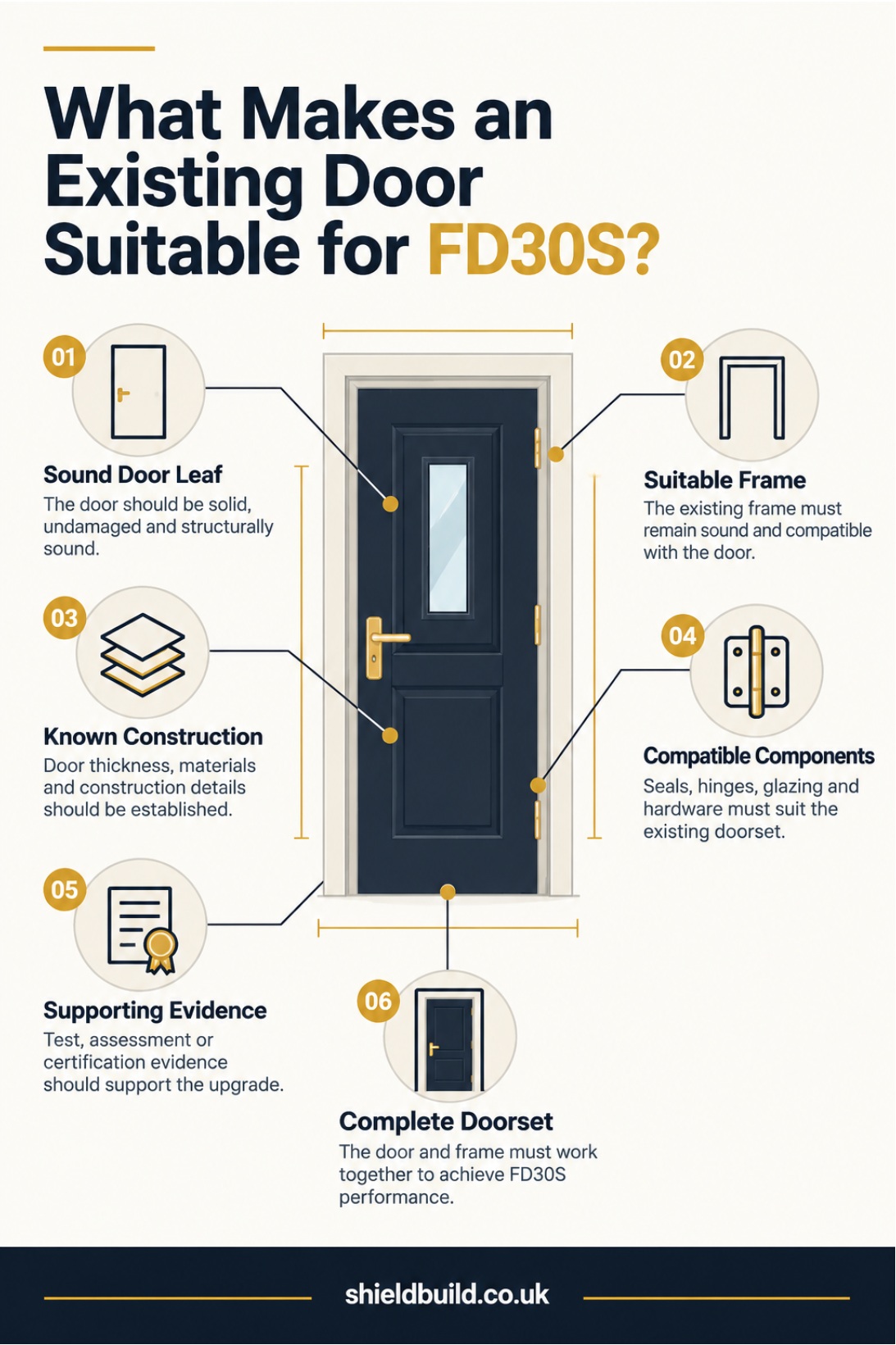
What makes an existing door suitable for fd30s

The key checks include:

Door Condition

The door leaf should be solid, structurally sound and able to close properly within the frame. Significant cracking, warping, delamination or water damage can affect the integrity of the leaf.

Minor wear is not the same as structural damage. A competent inspection should establish whether defects can be repaired or whether they compromise the door itself.

Existing Certification and Evidence

Evidence can come from manufacturer information, historic test data, construction details, door thickness, age and records of previous work.

A missing certificate does not automatically prove that an existing door is unsafe. It can, however, make it harder to justify a specific FD30S upgrade where the original construction and performance cannot be established.

Compatible Components

Intumescent seals, smoke seals, hinges, latches, closers, glazing and other hardware may be suitable for an upgrade where they are compatible with the existing assembly.

The important point is compatibility. Replacing every component with newer marked products does not automatically make the complete doorset FD30S.

Door and Frame Suitability

The door leaf cannot be assessed on its own. The frame, gaps, hinges, seals, closer and other components affect how the complete assembly performs.

A sound door can still present a problem when fitted into a badly damaged or unsuitable frame. RICS guidance also stresses that existing ironmongery should be assessed for its actual suitability. It should not be rejected simply because it lacks markings that may not have been required when the door was manufactured.  

When Does an FD30S Door Need Replacing?

Replacement becomes more appropriate when the existing door cannot reasonably demonstrate the required performance or its construction and condition make an upgrade impractical. This is different from saying every old or uncertified door must be replaced.
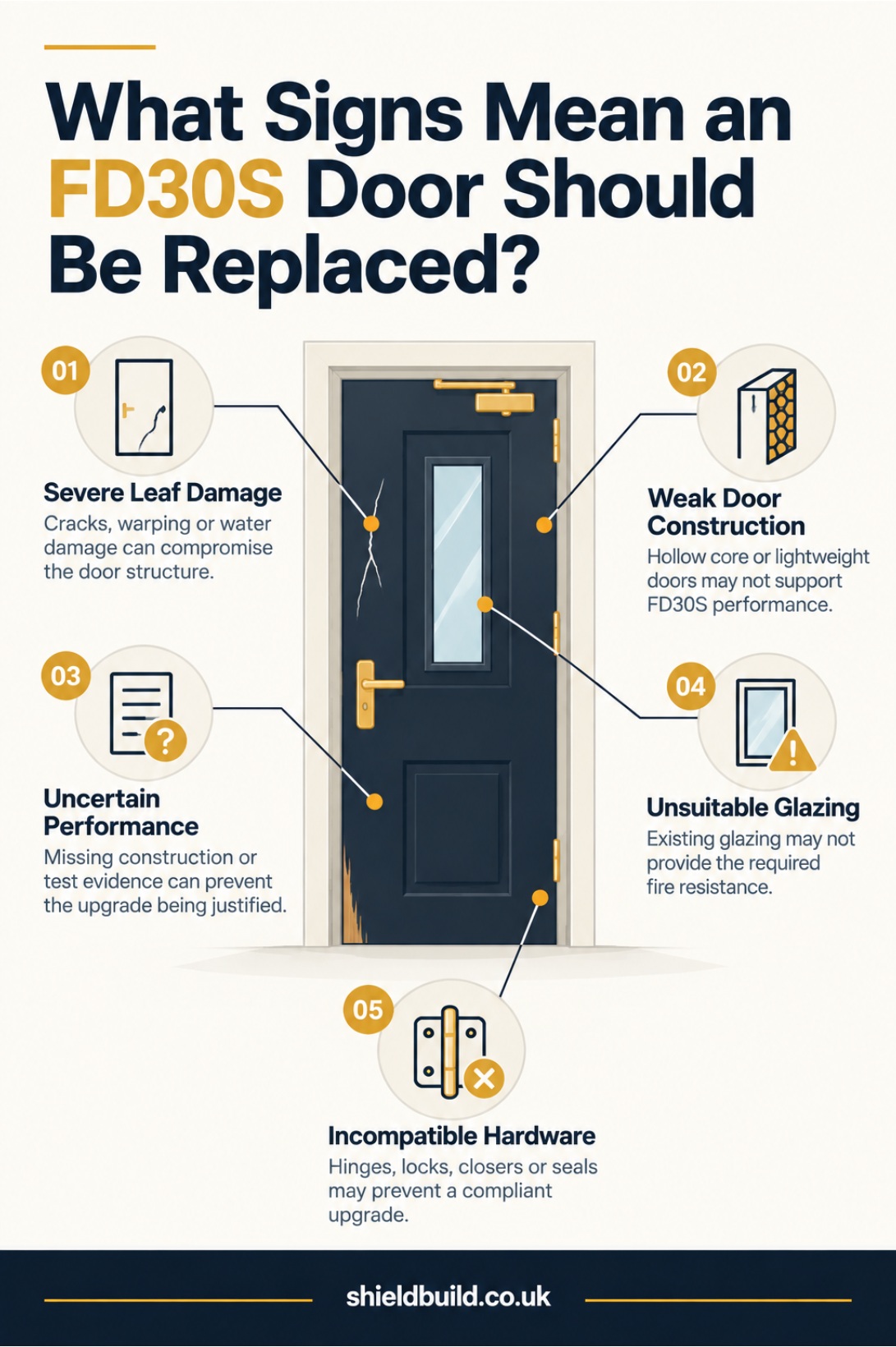
What signs mean an fd30s door should be replaced

Significant Damage

A badly cracked, warped, delaminated or water damaged door leaf may no longer provide a suitable basis for upgrading.

New seals and hardware cannot compensate for a door leaf that has lost its structural integrity.

Unsuitable Construction

Hollow core, very lightweight or louvred doors may not provide an appropriate basis for an FD30S upgrade.

A substantial solid timber door is a different proposition. It may offer a suitable starting point, provided its condition, construction and supporting evidence are satisfactory.

Missing or Inadequate Evidence

Evidence becomes particularly important where the door’s original construction or fire performance cannot be established.

Lack of paperwork does not automatically mean the door is unsafe. However, if there is not enough information to support the proposed upgrade, replacement may provide a more defensible route.

Incompatible Components

Glazing, seals, hinges, locks, closers or the frame can prevent an upgrade from being justified when they are not suitable for the existing door assembly.

The question is not simply whether an individual component is fire rated. It is whether the complete combination can support the required performance.

What Can Be Upgraded on an Existing Fire Door?

Several parts of an existing fire door may be replaced or upgraded when the proposed components are compatible with the door assembly. Common areas include:

  • Intumescent and smoke seals
  • Hinges
  • Latches
  • Locks
  • Door closers
  • Glazing and other ironmongery.

The work should be based on the actual door rather than a standard list of component replacements. Changing a seal or fitting a new closer can improve a door, but it does not by itself prove FD30S performance.

Where the existing door cannot support the required performance, or the proposed changes fall outside available test or assessment evidence, replacement may be necessary.

How Is an Existing Fire Door Assessed?

Assessment starts with the complete doorset rather than one individual component. The inspector checks:

  • Door leaf (condition, thickness, construction and visible damage)
  • Frame (material, condition, fit and compatibility with the door)
  • Gaps (consistent gaps around the door leaf and frame)
  • Hinges (type, condition, fixings and suitability)
  • Closer (condition, operation and ability to fully close the door)
  • Latch or lock (condition, operation and suitability for the doorset)
  • Seals (intumescent and smoke seals, condition and correct positioning)
  • Glazing (type, condition, beading and evidence of fire resistance)
  • Alterations or damage (cut outs, drilled holes, repairs or other modifications)

The construction and condition are then considered alongside available identification marks, certification, test evidence and records of earlier upgrades. Visual inspection alone cannot confirm an FD30S rating when suitable evidence is unavailable.

The purpose of the assessment is to establish the most appropriate route. That could mean minor remedial work, an upgrade or complete replacement.

Current industry practice also places greater emphasis on competence and supporting evidence. BWF Fire Door Alliance research found that 47% of respondents were looking for more proof of fire door performance in 2026, compared with 35% in 2023. 

Building Regulations

The Building Regulations decide whether a building needs an FD30 or FD60 fire door. They do not require the same fire door rating everywhere. Instead, the required rating depends on where the door is located, how the building is used and how long that area needs to resist the spread of fire.

The official guidance is set out in Approved Document B. It explains the minimum fire resistance expected for different parts of residential and commercial buildings. For example, a flat entrance door may require a different fire rating from a plant room or a protected stairwell. 

Rather than choosing the highest fire rating available, the correct approach is to install the rating specified for that location so the building’s fire safety measures work as intended.

Upgrade or Replace (Which Is Better)?

Neither option is automatically better. The right choice depends on the condition and construction of the existing door and whether the required performance can be properly supported.

Upgrade Replace
Door is structurally suitable Door is badly damaged
Compatible components are available Construction is unsuitable
Existing performance can be supported Performance cannot be demonstrated
Frame can be retained Frame or doorset is unsuitable
Upgrade can be properly installed Required performance cannot reasonably be achieved

A suitable existing door can avoid unnecessary replacement. A fundamentally unsuitable door should not be upgraded simply to save the cost of a new doorset.

How Do You Know an Upgraded Door Meets FD30S Requirements?

An upgraded door should only be treated as FD30S when evidence supports the performance of the complete doorset. This means the door, frame and fitted components need to match the construction covered by the evidence.

Suitable evidence may include:

  • Test reports showing fire and smoke performance
  • Assessment reports covering the specific construction
  • Certification confirming the required performance

The evidence should match the actual door and components after upgrading. Simply adding fire rated seals, hinges or a closer does not make the door FD30S.

If there is no suitable evidence to support the upgraded assembly, replacing the doorset may be the safer and more appropriate option.

Why Professional Fire Door Assessment Matters

Deciding whether to repair, upgrade or replace an existing fire door takes more than a quick visual check. A competent assessor needs to consider the door, frame, components, available evidence and fire risk together.

There are recognised competency routes within the sector, including the FDIS Certified Inspector qualification, the ABBE Level 3 Award in Fire Door Inspection and NAFDI registration. The right level of competence depends on the work being carried out and the type of assessment needed.

For inspections, remedial work and upgrade or replacement decisions, our fire door inspection and remedial works service covers assessment, repairs and installation.

FAQs

Can any existing door be upgraded to FD30S?

No. The door, frame, components, condition, and available evidence all need to support the proposed upgrade.

Can an FD30 be upgraded to FD30S?

Potentially, yes. The existing assembly must be assessed to establish whether suitable smoke control measures and supporting evidence are available.

Can you add smoke seals to an existing fire door?

Sometimes. Smoke seals can be fitted where compatible with the existing doorset, but fitting them alone does not prove FD30S performance.

Can the existing frame be retained?

Yes, where the frame is suitable, sound and compatible with the door and proposed upgrade.

When should a fire door be replaced?

Replacement may be needed where the door is badly damaged, unsuitable in construction or cannot be supported by adequate performance evidence.

Is certification required for an upgraded FD30S door?

Suitable test, assessment or certification evidence may be needed to demonstrate the required performance of the complete upgraded assembly.

Does an old fire door have to meet current standards?

Not automatically. Existing doors are not simply judged against every requirement that applies to newly installed fire doors.

Can a fire door be upgraded without replacing the whole doorset?

Sometimes. The existing door and frame must first be shown to be suitable for the proposed upgrade.

Conclusion

An existing fire door does not automatically need replacing because it is old or lacks modern certification markings. Equally, fitting new seals or hardware does not automatically make it FD30S. The door, frame, components and evidence all need to support the required performance. 

Not sure whether your existing fire door can be upgraded or needs replacing? Arrange a fire door assessment with us and we will assess the door and recommend the appropriate route.

Sources

Andrew Little

Founder and qualified carpenter at Shield Build, with 20+ years’ experience in construction and fire door compliance across the South East.

Share:

Planning an extension?
Let's talk it through

Book a free, no-obligation site survey and Andrew will advise on the planning route and give you an honest quote.

Related articles
FD30 vs FD60 Fire Doors

FD30 vs FD60 Fire Doors: What’s the Difference?

What Is a Fire Door and Why Does It Matter in Your Home

From Cramped to Comfortable: How to Add Real Space Without Moving Home

The Honest Truth About Fire Door Compliance: What Most Landlords Get Wrong

Why Your Extension Budget Always Goes Over and How to Stop It Happening

Accredited & trusted